
48 hr
Milan Cathedral & Rooftop Terraces Entry Ticket
- Entry ticket
- Mobile voucher
- Valid same day
- Free cancellation
Duomo Milano Archeological Area — Reserved Entry Beneath the Cathedral
Stone remembers what the surface forgot, silence keeps the rest.
Compare fares, pick the fit — all bookings are mobile-voucher and eligible for free cancellation where shown.
48 hr
2 hr
Worth it for history-minded visitors, skippable if rushed
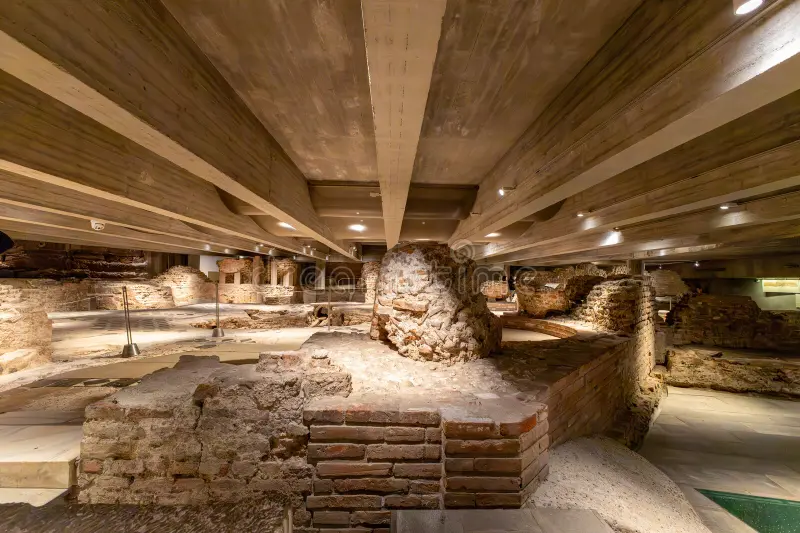
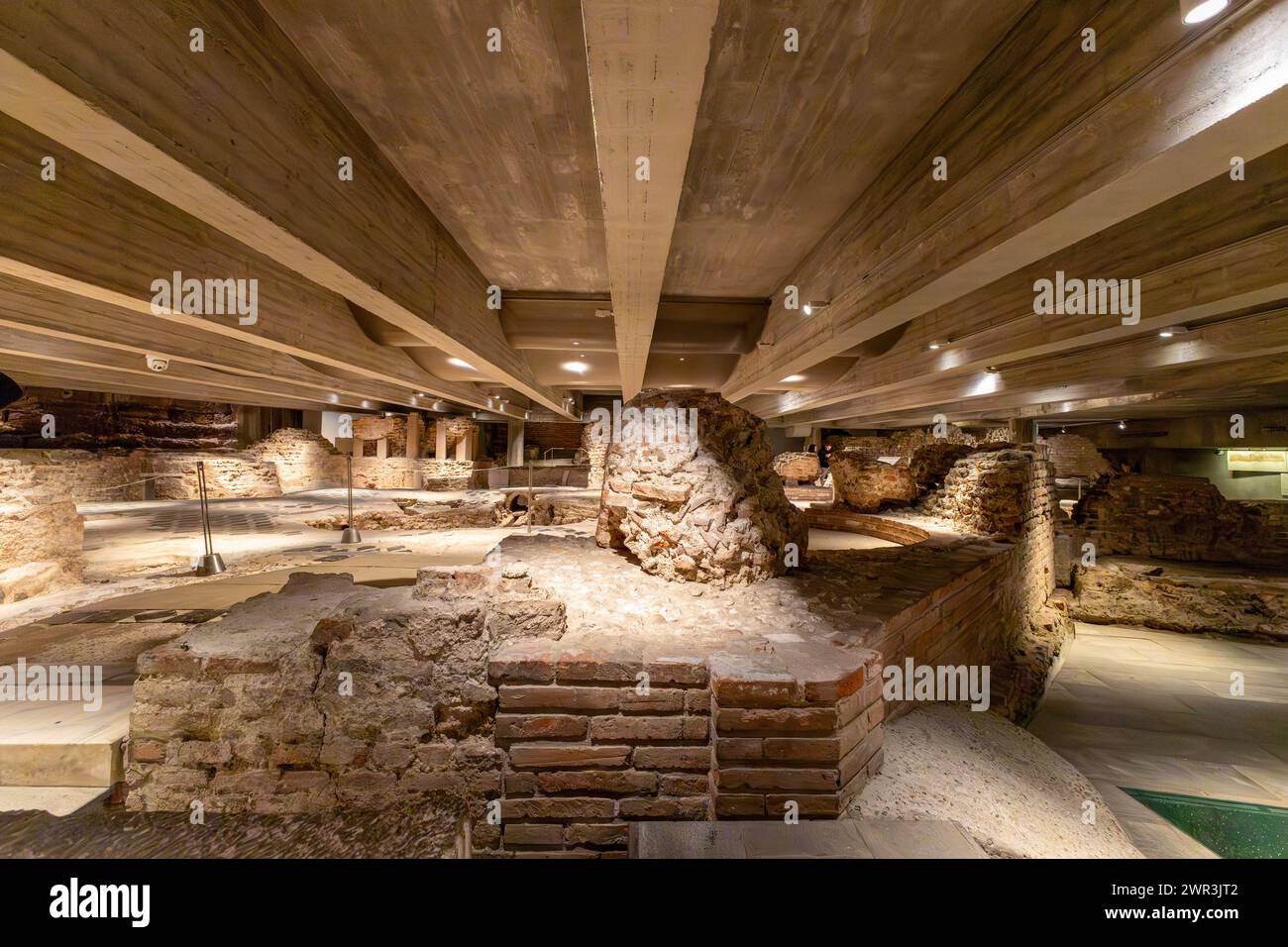
For history buffs, the duomo milano archeological area tickets add-on delivers unusual value: at 5 EUR on top of a valid Duomo cathedral ticket, you descend beneath Piazza del Duomo to the remains of the fourth-century Battistero di San Giovanni and the early basilica of Santa Tecla. That is a low-cost look at the roots of Milan's most famous landmark, and few Milan landmarks let you walk actual paleochristian foundations for the price of a coffee. The trade-off is scale. This is a compact, self-guided space, so those chasing a broad Milan cathedral tour or the rooftop terraces may find it too niche. Weigh it honestly: for anyone drawn to Roman and early-Christian layers, the duomo milano archeological area tickets tour rewards the small outlay. For travelers with a packed itinerary or little interest in ruins, that same 5 EUR is easily spent elsewhere. It pays off on curiosity, not spectacle.
Bottom line: If early-Christian ruins interest you, the duomo milano archeological area tickets tours justify their 5 EUR many times over; if not, spend it elsewhere.
Hand-picked experiences loved by thousands of travelers
1.5 - 2 hours
Free Cancellation
Explore Milan's Gothic masterpiece with express entry, then ascend to breathtaking rooftop views
1 to 1.5 hours
Free Cancellation
Fast-track guided visit to Milan's Gothic masterpiece with terrace views and expert storytelling
3 hours
Free Cancellation
Skip the lines to see Da Vinci’s masterpiece and explore Milan's majestic Duomo on this expert-led tour.
6 hours
Free Cancellation
Six-hour guided exploration of Milan's iconic landmarks with skip-the-line entry to da Vinci's masterpiece
2 hours
Free Cancellation
Explore Milan's most significant religious monuments with an expert guide on this intimate walking tour
Pass through bag scanners and metal detectors at the Duomo entrance before descending
View the fourth-century Baptistery of San Giovanni alle Fonti where early Christian rites took place
Walk among the excavated foundations of the earlier Basilica di Santa Tecla
Examine preserved floor mosaics and masonry from the Roman-era structures
Ascend back into the Duomo cathedral to continue the visit above ground
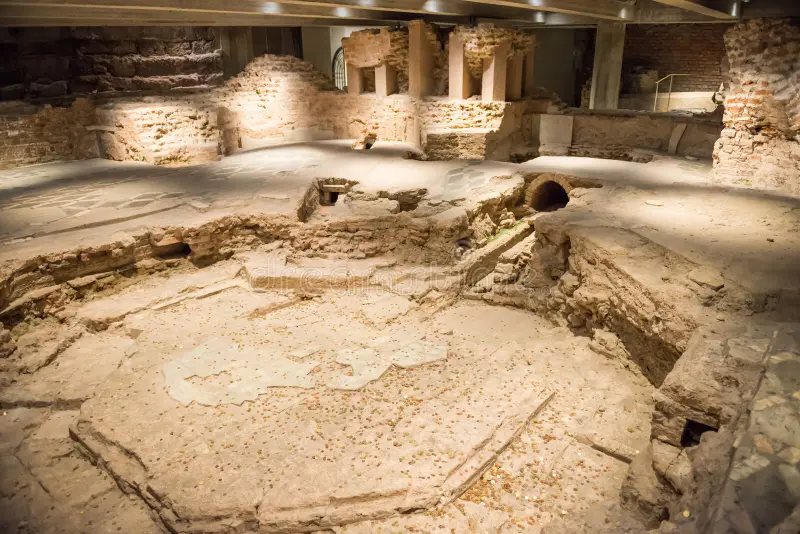
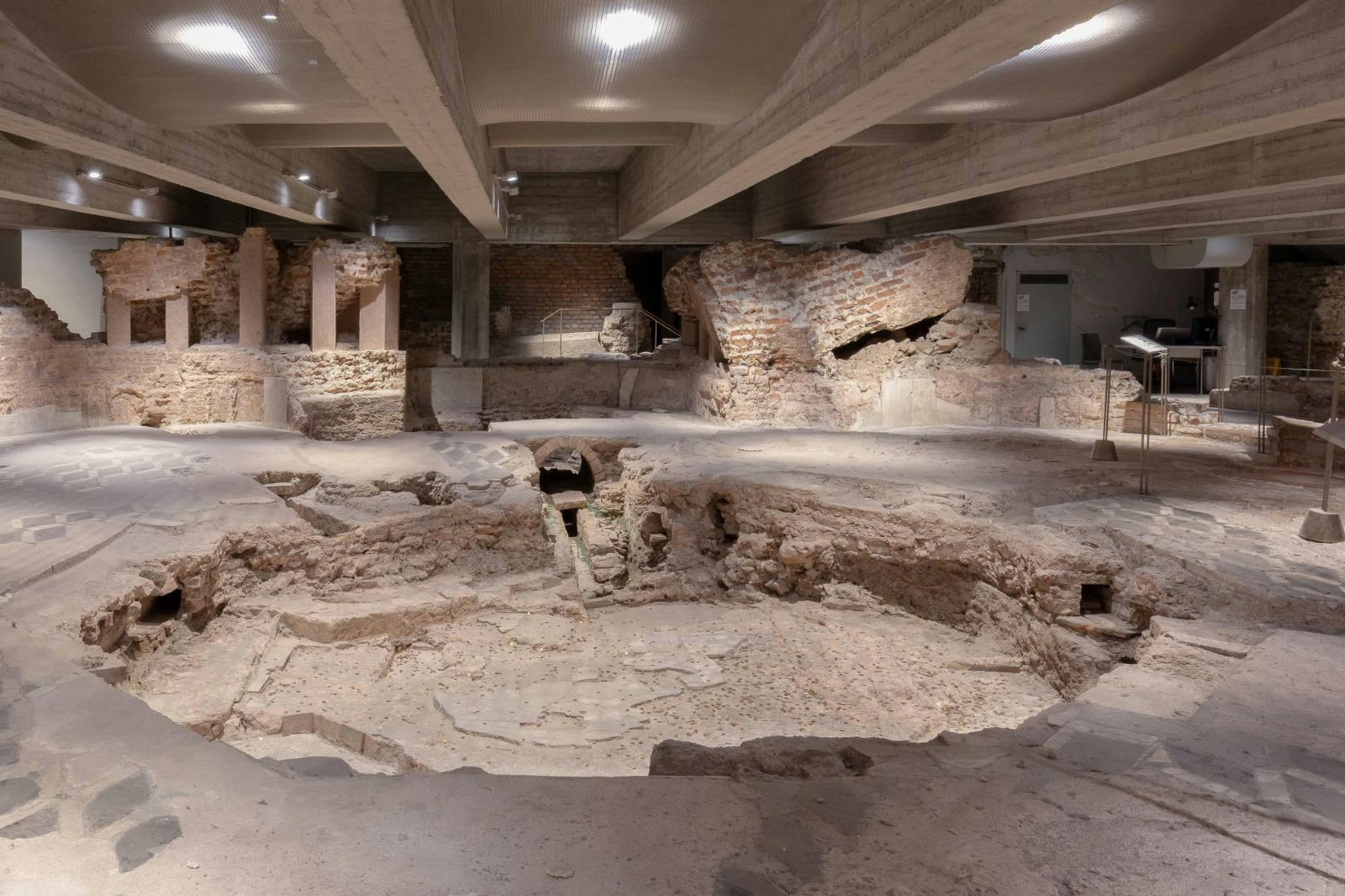
This octagonal fourth-century baptismal font is where, according to tradition, Saint Ambrose baptized Saint Augustine in 387 AD. Its excavated basin remains visible beneath the cathedral forecourt, predating the current Duomo by nearly a thousand years.
Excavated foundation walls trace the outline of this fourth-century basilica, one of two churches that stood on the site before construction of the Duomo began in 1386. Fragments of its apse are still visible among the underground walkways.
Sections of stone paving beneath the cathedral date to the Roman period, when the area sat within the ancient city of Mediolanum. The layering of pavement styles shows successive rebuilding phases across centuries.
Remains of this second, smaller baptistery believed to date to the early fourth century sit near the north side of the complex. It was reserved for female converts before being demolished in 1386 to make way for the Duomo.
Carved niches and fragments of tombs found during the 20th-century excavations point to the site's use as an early Christian burial ground. Some fragments date as far back as the late Roman Empire.
You enter through the cathedral and follow the signs toward the descent, your valid Duomo ticket already scanned. A staircase drops you out of the daylight and into cooler air, where the noise of Piazza del Duomo fades to a hush. At the bottom you pause on a raised walkway, and the octagonal outline of the baptistery opens below your feet, its eight walls still legible in the brick. You trace the perimeter slowly. Low lighting picks out the immersion pool at the centre, the worn thresholds, the channels that once carried water to the font. Interpretive panels sit at eye level, so you read the story of San Giovanni alle Fonti while standing inside it. You lean toward a section of Roman mosaic, close enough to count the tesserae, then step back to take in the full footprint of Santa Tecla's early basilica. You spend a measured circuit here, unhurried, letting the scale settle. The duomo milano archeological area tickets tour lets you move at your own pace rather than herding you past the ruins. When you climb back up, the transition is abrupt: from silent fourth-century stone into the towering Gothic nave, the shift measured in a single flight of steps. You leave with the rare sense of having stood in two Milans at once, one stacked directly beneath the other.
All the details about your upcoming adventure in one place
Beneath the cathedral's marble floor, the duomo milano archeological area tickets grant entry to the excavated remains of the fourth-century Baptistery of San Giovanni alle Fonti and the ancient Basilica of Santa Tecla. This descent into Roman and early-Christian Milan pairs naturally with a wider Milan Cathedral tour, letting you connect the crypt below with the Gothic spires above. Booking duomo milano archeological area tickets tours ahead secures a smooth entry through the Piazza del Duomo access point.
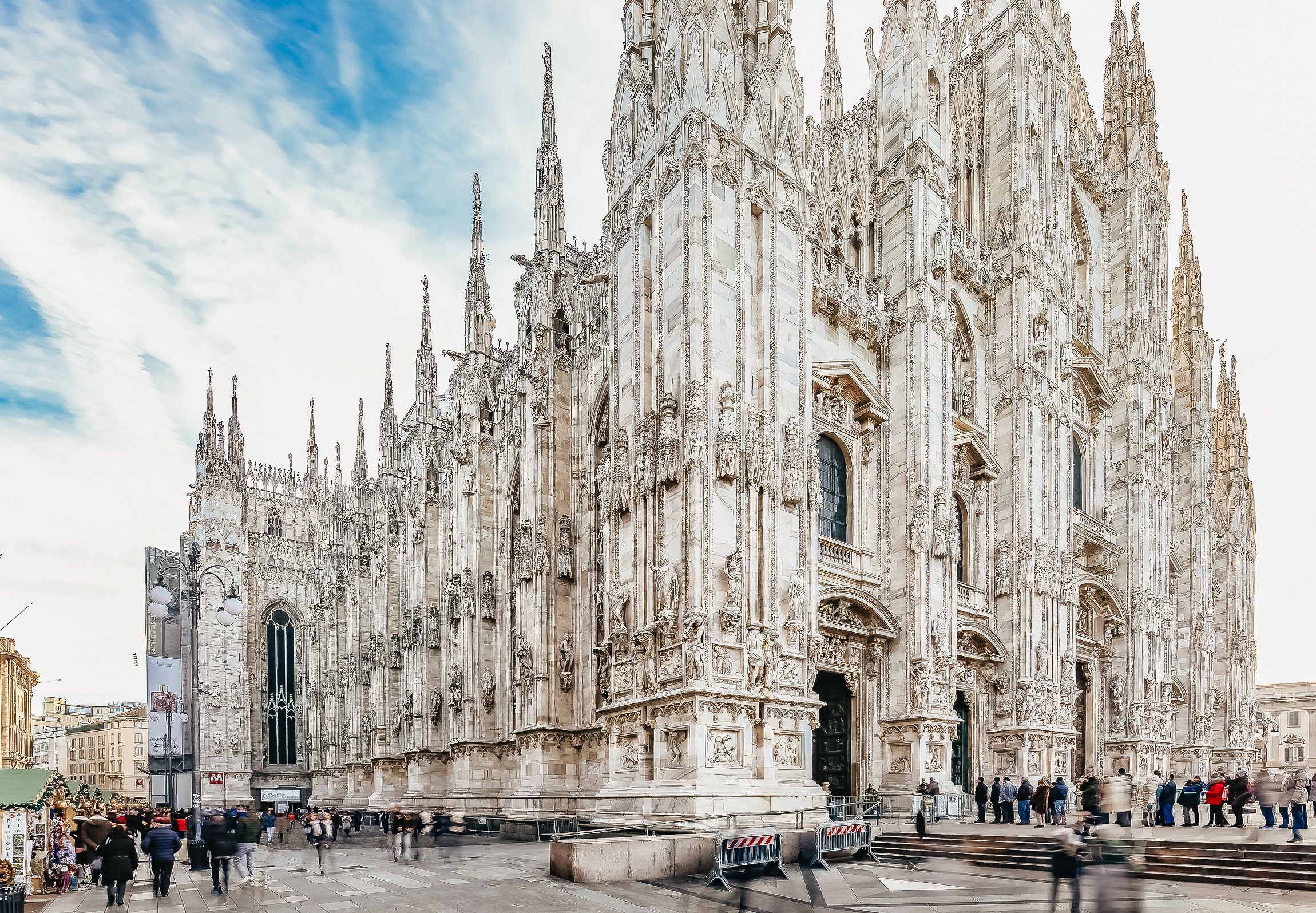
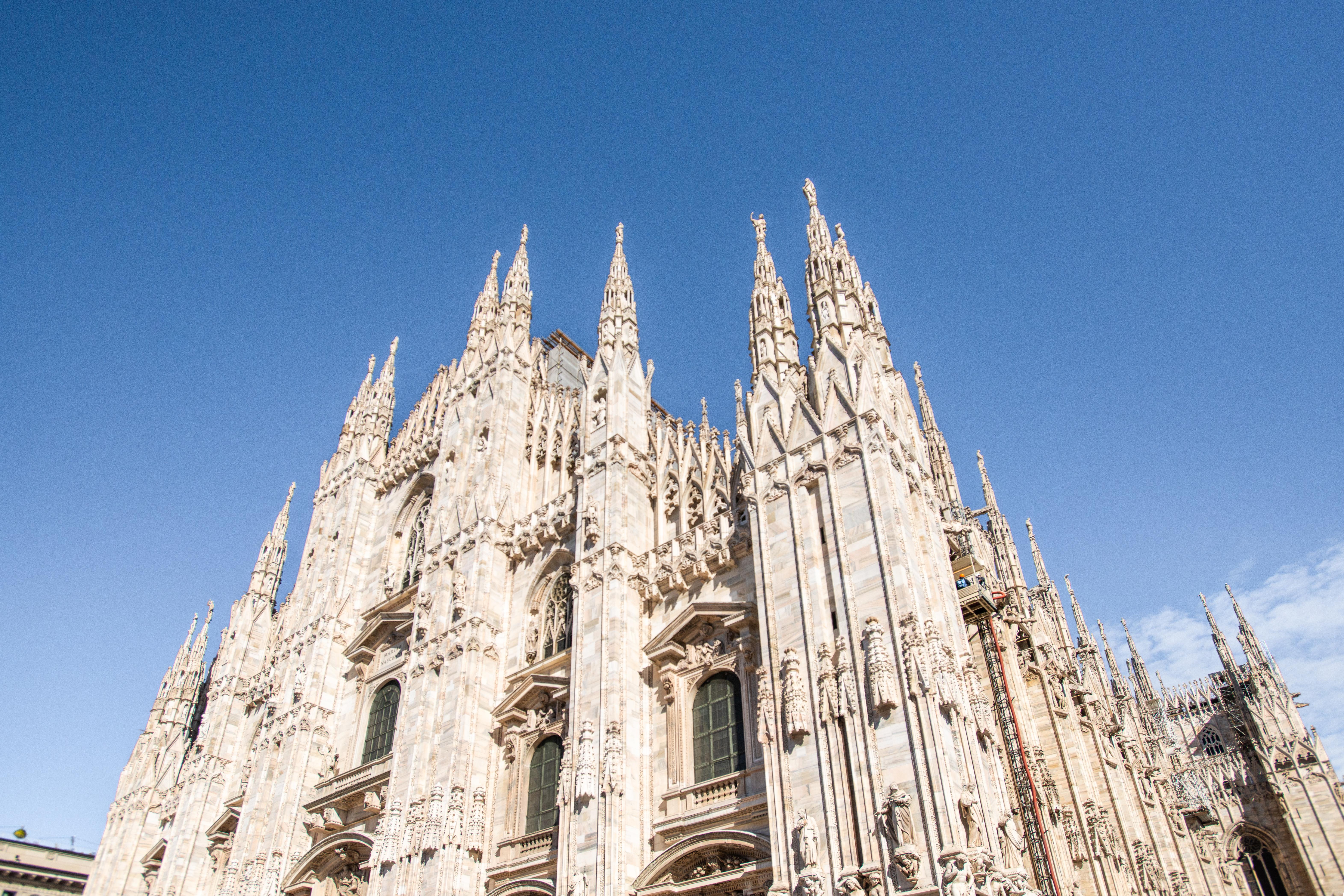
Beneath the marble floor of Milan's cathedral lie the remains of a fourth-century religious complex that predates the Gothic spires above by nearly a thousand years. When workers excavated the area in the 1940s and 1960s, they uncovered the octagonal Baptistery of San Giovanni alle Fonti, where Saint Ambrose is traditionally said to have baptized Saint Augustine in 387. The duomo milano archeological area tickets grant access to this submerged layer, a rare vertical section through Milanese history where late-Roman foundations rest directly under a living place of worship. The significance of the site extends well past its stones. The octagonal font, with its eight sides, encoded a theological idea: the eighth day, resurrection, the passage from death into new life. That geometry rippled outward across centuries of Christian architecture, and its echo can be traced in baptisteries from Ravenna to Florence. To descend here is to stand at a hinge point where the Roman city of Mediolanum gave way to the medieval one, and where the ecclesiastical authority of Ambrose reshaped the western church. Architecturally, the excavated zone reveals more than a single monument. Alongside the baptistery sit the footprint of the early basilica of Santa Tecla, fragments of mosaic paving, sections of hypocaust heating, and the water channels that once fed the immersion pool. The brickwork shows the characteristic Roman opus techniques, laid in courses that engineers still study for their durability. Milan landmarks rarely offer this kind of stratigraphy in one confined space, and the area archeologica del duomo reads almost like a core sample of the city's spiritual life. Above ground, the Cattedrale Metropolitana continues its own long story, begun in 1386 and dressed in Candoglia marble hauled down from quarries along Lake Maggiore. The archaeological level is bound to that structure by a shared ticket, so the underground survives as a chapter of the cathedral rather than a separate curiosity. Visitors moving through the milan cathedral underground tour pass from the fifteenth-century nave into a world of terracotta and worn thresholds, the two eras stacked one atop the other. The conservation of the ruins is itself an ongoing act of stewardship, lit and stabilized so the fragile mortar endures beneath thousands of footsteps daily. Located at Piazza del Duomo in the 20122 postal district, the entrance sits within the cathedral's own footprint, drawing on the same flow of pilgrims and travellers who have crossed this square for six centuries. For those weighing duomo milano archeological area tickets tickets against the many attractions of the city, the appeal is less spectacle than depth — a quiet descent into the sediment of faith, empire, and continuity that made Milan what it is.
Beneath the fifteenth-century nave lies a fourth-century font where, by tradition, Augustine passed from death into new life.
Because entry to the archaeological area requires passing through the Duomo cathedral itself, the same dress code applies: shoulders and knees must be covered for both men and women. Sleeveless tops, shorts above the knee, and short skirts will be turned away at the door, so pack a light scarf or shawl if you are visiting on a hot Milan summer day.
All visitors pass through an airport-style security check with metal detectors and bag scanners before entering the Duomo complex, including the underground archaeological area. Large backpacks, suitcases, and bulky bags are not permitted and there is no on-site cloakroom, so plan to carry only a small daypack or handbag.
Photography without flash is allowed throughout the archaeological area, including around the fourth-century baptistery remains and the ancient basilica foundations. Tripods, monopods, and professional lighting rigs are not permitted in the confined underground space.
The dim lighting, uneven ancient stonework, and narrow walkways of the archaeological area make it more suited to children old enough to walk carefully and follow a guide; strollers are difficult to maneuver in the space. Children under 6 typically enter free with a paying adult on the combined Duomo ticket.
The archaeological area sits below ground level beneath the cathedral forecourt and is reached by a staircase; wheelchair users should ask Duomo staff at the entrance about the alternative accessible route, as the standard descent is not step-free. Staff at the ticket office and entrance can assist with arranging support in advance.
No food or drink is permitted inside the archaeological area or anywhere within the Duomo cathedral above it. Visitors should finish snacks or coffee in the Piazza del Duomo before joining the ticket queue, since there is no café or refreshment point inside the underground remains.
Quietest weekday
Busier, weekend visitors
Mass hours may restrict access
Hours
Daily 08:00–19:00, last entry approx. 30 minutes before closing
Address
Piazza del Duomo, 20122 Milano MI, Italy
Access
Entrance via the Duomo cathedral, step-free lift available on request
Best time
08:00–09:30 for fewer crowds ahead of tour groups
Bag policy
Small bags only, no large backpacks or suitcases
Public transport · 10 minutes from Milano Centrale · Metro ticket around €2.20
Take metro lines M1 or M3 to the Duomo station, which exits directly onto Piazza del Duomo beside the cathedral entrance.
Walk · 40 minutes · Free
From Milano Centrale station it is roughly a 40-minute walk south through central Milan to Piazza del Duomo.
Taxi · 10-15 minutes from Centrale · Approx. €12-18
Taxis can drop passengers at the edge of the pedestrianized Piazza del Duomo, close to the cathedral entrance.
Bike · 15 minutes · Approx. €3-5 per session
Bike-sharing docks near Via Torino and Via Orefici allow riders to reach the piazza quickly, though the square itself is pedestrian-only.
Tickets for the archaeological area are issued alongside a valid Duomo cathedral ticket for the entrance fee of 5 EUR; most bookings can be cancelled or rescheduled up to 24 hours before the visit slot for a full refund. No-shows and same-day cancellations are generally non-refundable.
Recommended time
15-20 minutes
The archaeological area itself is a compact underground stop beneath the nave, so booking duomo milano archeological area tickets buys you a focused 15 to 20 minute visit among the baptistery ruins, not a long roam. Arrive in the 08:00-09:30 best arrival window and go straight down before the cathedral fills, since a quiet descent here sets up the rest of a Duomo Milan tour without backtracking through crowds later. Add a few extra minutes if you want to read the interpretive panels on the early Christian remains, and subtract nothing further, since the space is small and there is little to linger over regardless of skip-the-line Duomo access. Queues at the archaeological entrance are usually short even when the security line upstairs is long, since it draws far fewer visitors than the terraces or nave.
Crowd levels through the day
Weather · crowds · average price — dots go green to amber to red as each metric rises.
March to May brings mild temperatures around 15-20°C and moderate crowds before the summer peak. Easter week is notably busier at the cathedral entrance above the archaeological area.
June through August sees the heaviest tourist volume and temperatures often above 28°C, making early morning visits to the archaeological area more comfortable underground. School holidays across Europe add to daytime queues at the security check.
September and October offer cooler weather near 18°C and thinner crowds after the summer rush eases. This is a favorable window for a calmer descent into the underground remains.
December to February is the quietest period apart from the Christmas and New Year week, when visitor numbers spike around the piazza. Cold temperatures make the underground archaeological area a comfortable indoor stop.
Archaeological area access is tied to the Duomo cathedral ticket, and timed entry slots for popular morning windows can sell out during summer, so booking in advance secures the 08:00–09:30 arrival window.
Bring a scarf or light jacket even in July, since bare shoulders or short shorts will be turned away at the security check before you can reach the underground remains.
A Culture Pass or Duomo Pass that bundles the archaeological area with the cathedral and museum avoids a second wait in line for a separate archaeological area ticket.
The staircase and walkways among the ancient basilica foundations are uneven stone, so flat, closed-toe shoes make the descent easier.
Sunday mornings can see temporary access restrictions to the cathedral nave for services, which may briefly affect the route down to the archaeological area.
The Duomo Museum sits just across from the cathedral at Palazzo Reale and pairs naturally with a visit to the archaeological area for context on the site's Roman and early Christian layers.
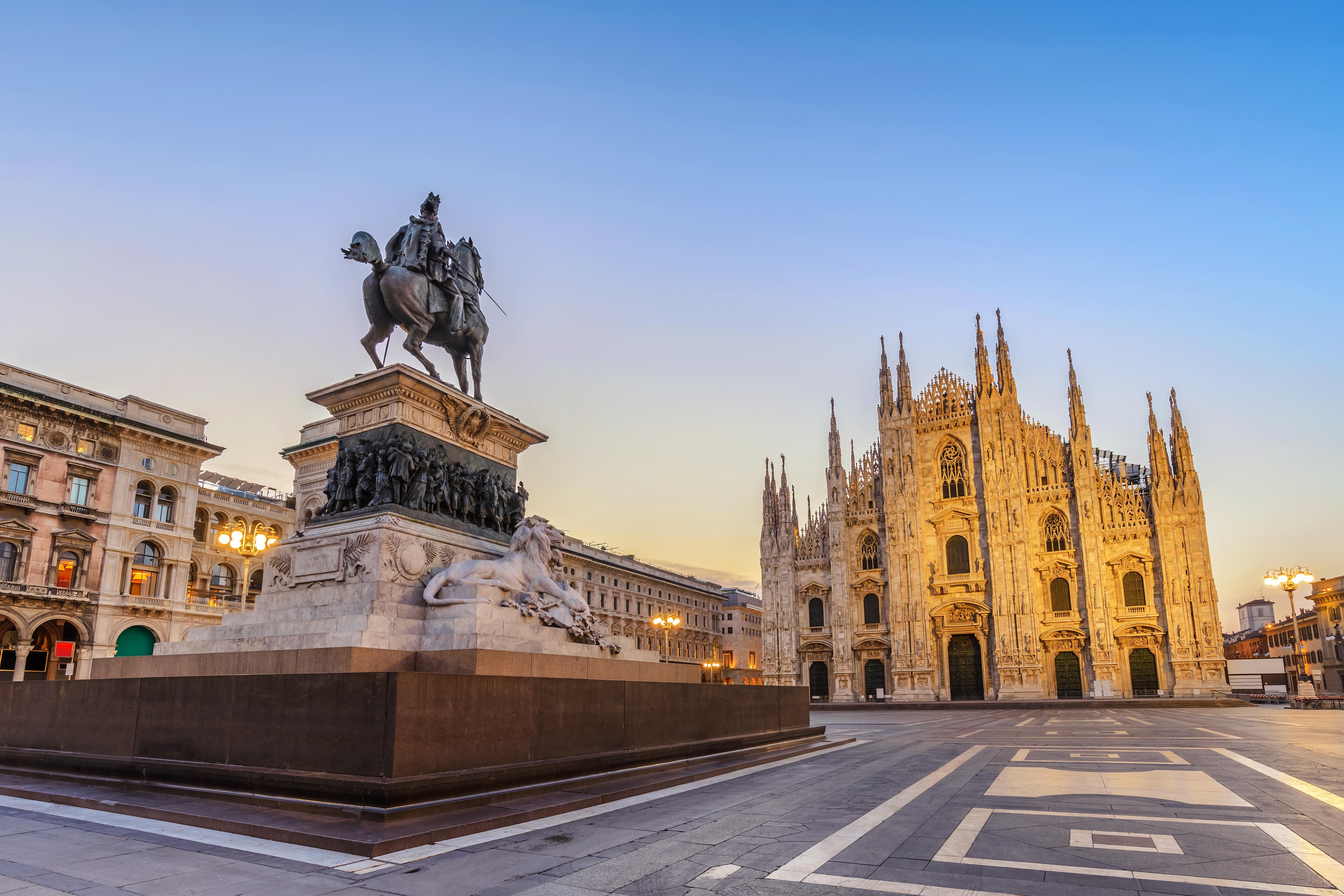
Piazza del Duomo, 20122 Milano MI, Italy
Ticket holders queue here before descending to the archaeological area
Get directionsBeneath the marble floor of Milan Cathedral lies a stratum of late antiquity that the duomo milano archeological area tickets grant access to. The story begins in the 4th century, when the city of Mediolanum served as an imperial capital. Two structures rose near the present piazza. The Basilica of Santa Tecla stood as the summer cathedral. Beside it emerged the Baptistery of San Giovanni alle Fonti, built to an octagonal plan around 378 under Bishop Ambrose. The octagon carried meaning. Eight sides signified the eighth day, the day of resurrection. Here occurred the moment that anchors the site. On the Easter vigil of 387, Ambrose baptized Augustine of Hippo in these very fonts. The convert would become one of the defining minds of Western thought. The baptismal pool, roughly three metres across, survives in outline today. Around it, fragments of mosaic paving and Roman brickwork remain legible to anyone who descends. A Milan Duomo tour that skips this level misses the cathedral's oldest witness. The medieval turn was destructive. In 1386, under Archbishop Antonio da Saluzzo and with the backing of Gian Galeazzo Visconti, workers began demolishing Santa Tecla and its neighbours to clear ground for the Gothic cathedral. The baptistery was buried rather than obliterated. Centuries of construction sealed the ancient remains beneath rising Candoglia marble. The duomo milano archeological area tickets tour now leads through what that demolition preserved by accident. Milan's landmarks are layered this way, one age pressing on the last. Rediscovery came in the 20th century. Excavations tied to the Milan Metro works and cathedral studies in the 1940s exposed the octagonal foundations. Further archaeological campaigns through the 1960s consolidated the crypt-level display. Today the remains open to the public, and duomo milano archeological area tickets tickets, priced at 5 EUR and requiring a valid Duomo cathedral ticket, cover the descent. Guided duomo milano archeological area tickets tours trace the paleochristian outlines. The address remains Piazza del Duomo, 20122 Milano MI, and the early arrival window of 08:00 to 09:30 suits those seeking the site quietly. What survives is austere. Bare stone, worn mosaic, an empty font. Yet these fragments hold the origin of Milanese Christianity and the memory of Augustine's conversion.
Basilica of Santa Tecla serves as Mediolanum's summer cathedral.
Baptistery of San Giovanni alle Fonti is built to an octagonal plan under Bishop Ambrose.
Ambrose baptizes Augustine of Hippo in the baptistery's fonts at the Easter vigil.
Demolition of Santa Tecla begins under Antonio da Saluzzo to clear ground for the Duomo.
Metro and cathedral excavations expose the buried octagonal foundations.
Archaeological campaigns consolidate the crypt-level display for public viewing.
Real experiences from real travelers
We booked the duomo milano archeological area tickets on a hot June afternoon and the cool air below the cathedral was a relief after the crowds outside. The octagonal baptistery where Saint Ambrose is said to have baptized Augustine felt quiet and cavernous, with the ancient brick still visible under soft light. Bring a light layer, it is genuinely chilly down there.
Standing over the Baptistery of San Giovanni alle Fonti was the highlight of our Milano cathedral tour. The Roman and early Christian layers are well signposted and you can trace the outline of the old Basilica of Santa Tecla in the stone. Allow a little time to let your eyes adjust to the dim lighting.
The archaeological area under the Duomo is easy to miss but worth the descent. It is compact, so do not expect hours of exploring, but the mosaic fragments and font ruins are genuinely old and atmospheric. We combined our duomo milano archeological area tickets tickets with the cathedral entry and the flow worked well.
Fascinating to stand beneath one of Milan's landmarks and see the 4th-century foundations laid bare. Our skip-the-line Duomo access meant we walked straight down without much waiting. The stonework near the old baptismal font is remarkably intact and dimly lit in a way that feels reverent.
A calm contrast to the busy Candoglia marble façade above. The duomo milano archeological area tickets let us wander the ancient walkways at our own pace on a grey winter morning. The interpretive panels explain the Santa Tecla basilica clearly in several languages.
Do not go expecting a huge site, it is one underground level, but the Roman baths remnants and the octagonal font are special. We joined one of the duomo milano archeological area tickets tours and the guide brought the layers to life. Photography was fine without flash.
We were surprised how few people knew about the archaeological area under the cathedral. The San Giovanni alle Fonti baptistery is where early Christian Milan comes alive, and the cool stone corridors were near empty at midday. A rewarding stop among the city's landmarks.
Booked the duomo milano archeological area tickets tour and appreciated the context our guide gave about Saint Ambrose and the ancient font. The lighting is low and the ceilings vault overhead in a way that makes the ruins feel monumental. Comfortable shoes help on the uneven stone.
A short but memorable walk through the Roman and early medieval layers beneath the piazza. The remains of the old basilica and the baptismal pool are clearly laid out. We visited late afternoon and had the underground almost to ourselves.
The Milano cathedral archaeological tour under the Duomo gave real depth to our visit. Seeing the octagonal baptistery footprint where Augustine was baptized was moving, and the cool dim space was a welcome pause from summer heat above.
Everything you need to know for your journey
The archaeological area is open daily from 08:00 to 19:00, matching the cathedral's regular hours, so duomo milano archeological area tickets can be used any day of the week.
Access requires a valid Duomo cathedral ticket alongside the archaeological area fee of 5 EUR; both are typically purchased together as part of duomo milano archeological area tickets tours or combined passes.
Wheelchair users should speak with staff at the Duomo entrance, since the standard route to the underground remains involves a staircase and an alternative accessible path may need to be arranged.
Large backpacks, suitcases, tripods, food and drink, and sharp objects are among the items not allowed; a full list is available at the entrance security checkpoint.
Yes, non-flash photography is permitted throughout the underground remains, though tripods and monopods are not allowed in the confined space.
Arriving between 08:00 and 09:30 offers fewer crowds before tour groups arrive, making it the recommended window for duomo milano archeological area tickets.
Shoulders and knees must be covered for all visitors, consistent with the dress code enforced at the main Duomo Milano entrance above the archaeological area.
No food or drink is permitted inside the archaeological area or the cathedral, so finish any snacks or drinks in Piazza del Duomo beforehand.
The Duomo metro station on lines M1 and M3 exits directly onto Piazza del Duomo, a short walk to the cathedral entrance where duomo milano archeological area tickets are collected.
The site is manageable for families with children old enough to navigate uneven stone walkways and stairs, though strollers are difficult to bring inside.
Most duomo milano archeological area tickets tickets can be cancelled or rescheduled up to 24 hours before the visit for a refund, though same-day cancellations are generally non-refundable.
The Galleria Vittorio Emanuele II, Teatro alla Scala, and Palazzo Reale are all within a five-minute walk and combine well with a Milan landmarks itinerary alongside the Duomo.
A 19th-century glass-domed shopping arcade connecting Piazza del Duomo to Piazza della Scala. Its mosaic floors and iron-and-glass ceiling make it one of Milan's most photographed interiors.
Milan's renowned opera house, opened in 1778, sits just north of the Galleria. The adjoining museum displays opera costumes, instruments, and composer memorabilia.
The former royal palace beside the cathedral now hosts rotating art exhibitions in its grand historic halls. Its ground floor connects closely to the Duomo Museum entrance.
A medieval square just west of the Duomo lined with porticoed buildings from Milan's communal era. It once served as the city's civic and commercial center.
A 14th-century church attached to Palazzo Reale, notable for its Gothic bell tower and frescoed interior. It is closed on Wednesdays.
Housed in a former bank building steps from the Galleria, this hotel pairs marble interiors with easy access to the Duomo.
A design-focused boutique hotel just behind the cathedral, popular for its rooftop-adjacent views of the spires.
The pedestrianized zone immediately around Piazza del Duomo offers dense mid-range and budget hotel options within a short walk of the cathedral.
A no-frills budget chain option a short walk from the cathedral, convenient for visitors prioritizing location over amenities.
Join thousands of happy travelers who have discovered this incredible experience
Book Your Experience Now