
48 hr
Milan Cathedral & Rooftop Terraces Entry Pass
- Multi-attraction access
- Mobile voucher
- Flexible dates
- Free cancellation
Duomo Milan Rooftop — Terrace Access & Guided Ascents
Marble spires above the city, sky where saints stand.
Compare fares, pick the fit — all bookings are mobile-voucher and eligible for free cancellation where shown.
48 hr
2 hr
2 hr
Picking the right duomo milan rooftop ticket comes down to two questions: how you want to reach the terraces, and whether you want to add the cathedral interior and museum. The official options split into a stairs-only rooftop pass, a lift pass, and a combo ticket, so choose based on mobility and how much of the monumental complex you want to see.
| Rooftop by Stairs (251 steps) |
Top pick Rooftop by Lift (Elevator) |
Combo Lift/Stairs (+ Cathedral & Museum) | |
|---|---|---|---|
| Access method | 251-step climb, one-way staircase system | Elevator to first terrace, some further steps | Elevator or stairs, plus separate Duomo entrance |
| Physical demand | Sustained climb, no rest platforms | Minimal, brief additional stair section | Same as chosen ascent method, longer visit overall |
| What's included | Rooftop terraces only | Rooftop terraces only | Cathedral interior, museum, San Gottardo church, rooftop |
| Best for | Budget-minded, fit visitors | Visitors with limited mobility or time | First-timers wanting the full monumental complex |
| Starting price | 16 EUR full adult price | Roughly 18 EUR full adult price | From about 22 EUR (stairs) or 26 EUR (lift) |
| See tickets & prices |
Verdict: First-time visitors set on seeing everything should book the combo ticket, while those focused purely on the terraces can save money on the stairs-only rooftop pass or trade a few euros for ease on the lift option, and either standalone duomo milan rooftop tickets or full duomo milan rooftop tours work well depending on how much of the complex you want to cover.
Worth it for most, unless stairs deter you
For 16 EUR you climb 251 stairs to walk directly among the Gothic spires, flying buttresses, and marble pinnacles of the duomo milan rooftop — not viewing them from a distance but standing inside the forest of carved stone. The payoff is proximity: you touch the same white Candoglia marble that took centuries to raise, and on clear days the Alps sit on the horizon. That close-range access to Milan landmarks is what justifies the fee. It pays off best for first-time visitors, architecture lovers, and anyone who values the terraces themselves over a generic panorama. Budget travelers who mainly want a city view can get comparable heights cheaper elsewhere, and the rooftop-only ticket skips the cathedral interior. Weighed against similar rooftop terraces in Europe, the fee reads as fair rather than inflated for what the ascent delivers.
Bottom line: If you can manage the climb, the duomo milan rooftop tickets earn their 16 EUR for the rare chance to stand among the spires themselves.
Hand-picked experiences loved by thousands of travelers
1.5 - 2 hours
Free Cancellation
Explore Milan's Gothic masterpiece with priority access, then ascend to breathtaking rooftop views
1 - 1.5 hours
Free Cancellation
Fast-track guided visit inside Milan's Gothic masterpiece with access to the stunning rooftop terraces
2 hours
Free Cancellation
Fast-track access to Duomo's panoramic terraces and sacred interior with expert local guidance
3 hours
Free Cancellation
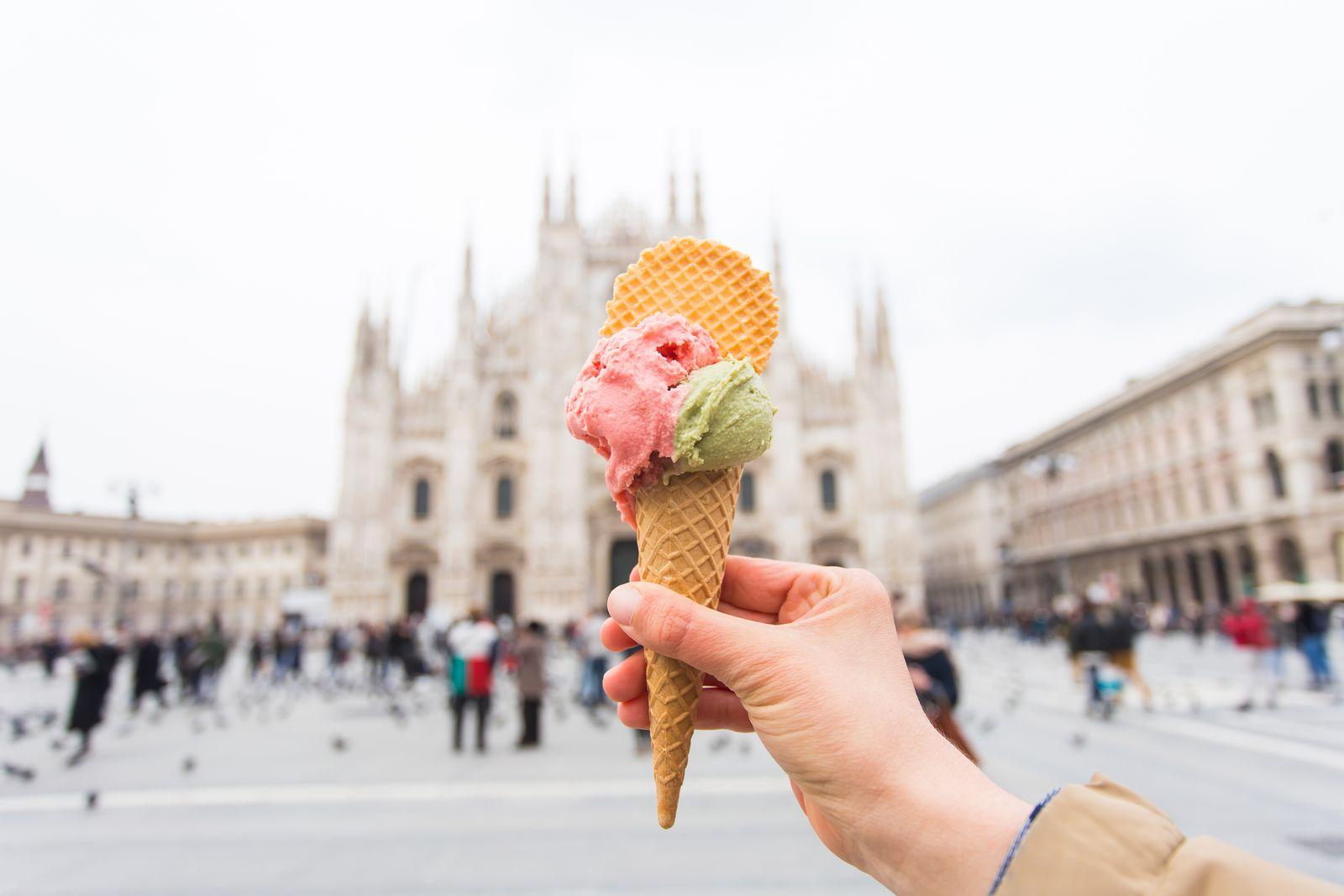
Discover Milan's iconic landmarks with priority access, rooftop views, and artisan gelato
3.5 hours
Free Cancellation
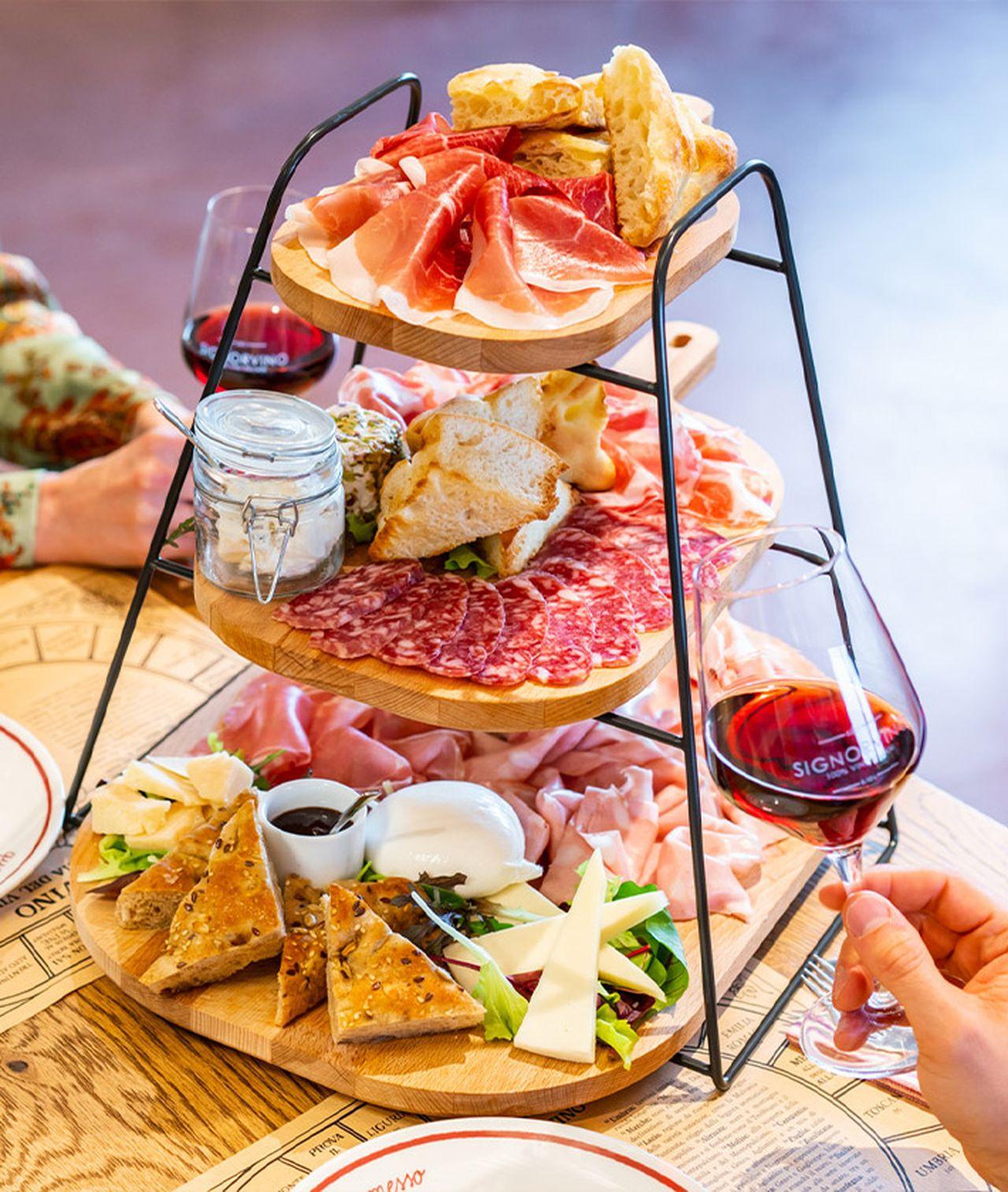
Explore Italy's largest cathedral with rooftop access, then savor regional wines and appetizers
Pass through the entrance screening at the transept before the stair climb begins
Climb the 251 steps of the spiral staircase to reach the main terrace level
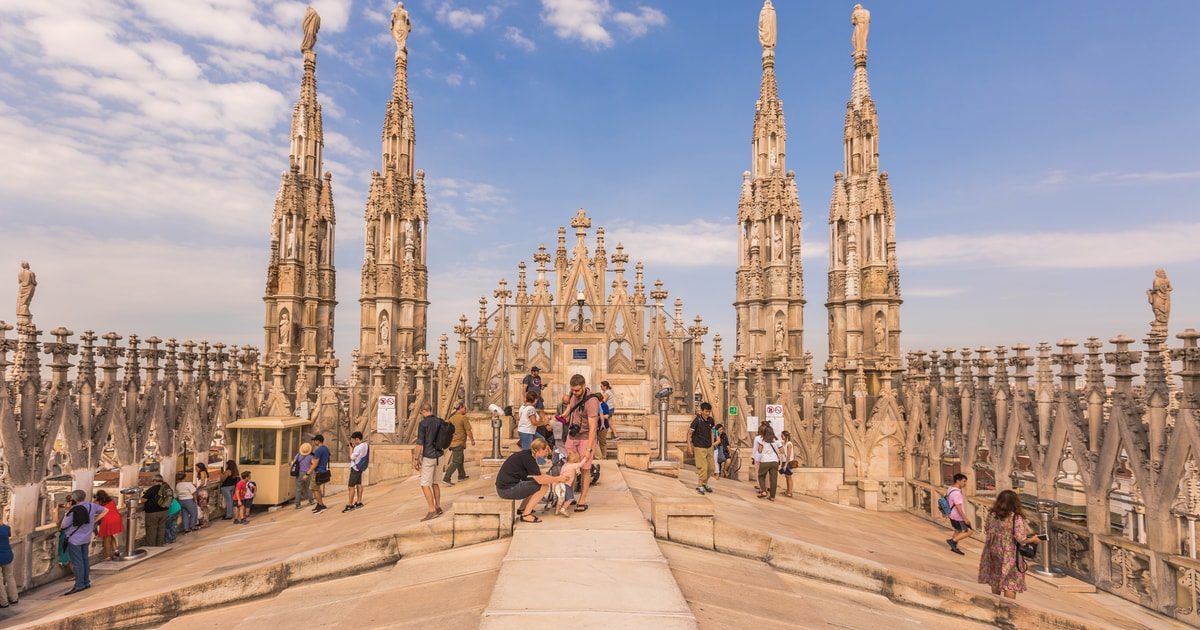
Walk among the 135 spires and flying buttresses, pausing near the central spire for views of the Madonnina
On clear days, look north from the upper terrace for distant views of the Alps
Take the stairs or lift back down to ground level near the transept
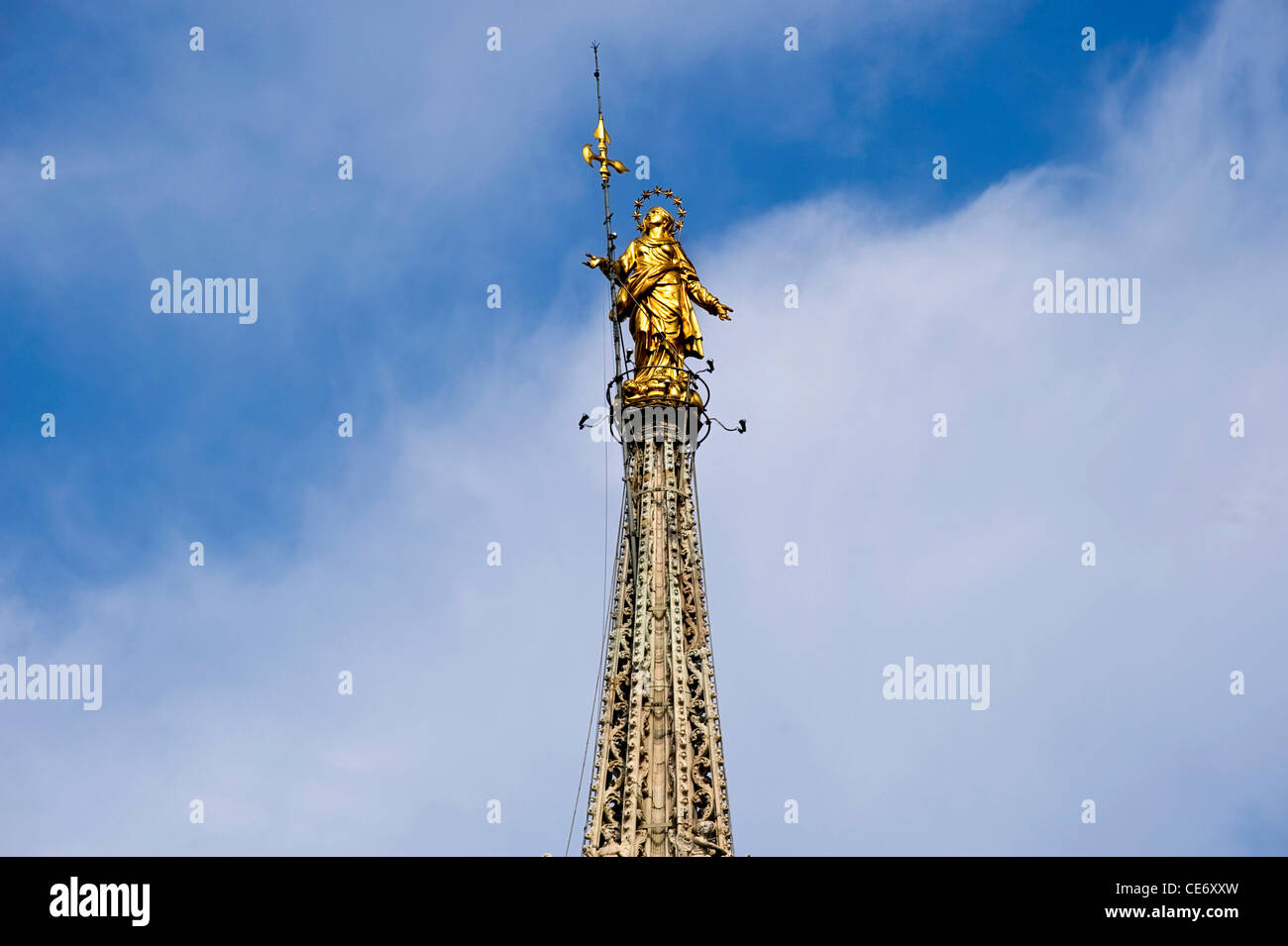
A gilded copper statue of the Virgin Mary standing atop the cathedral's tallest spire since 1774. Despite its diminutive name, the figure stands over four meters tall and is visible from across the city skyline.
Rising to roughly 108.5 meters, this is the highest point of the cathedral and the structural climax of its Gothic silhouette. Construction of the spire in the 18th century completed centuries of vertical ambition begun in 1386.
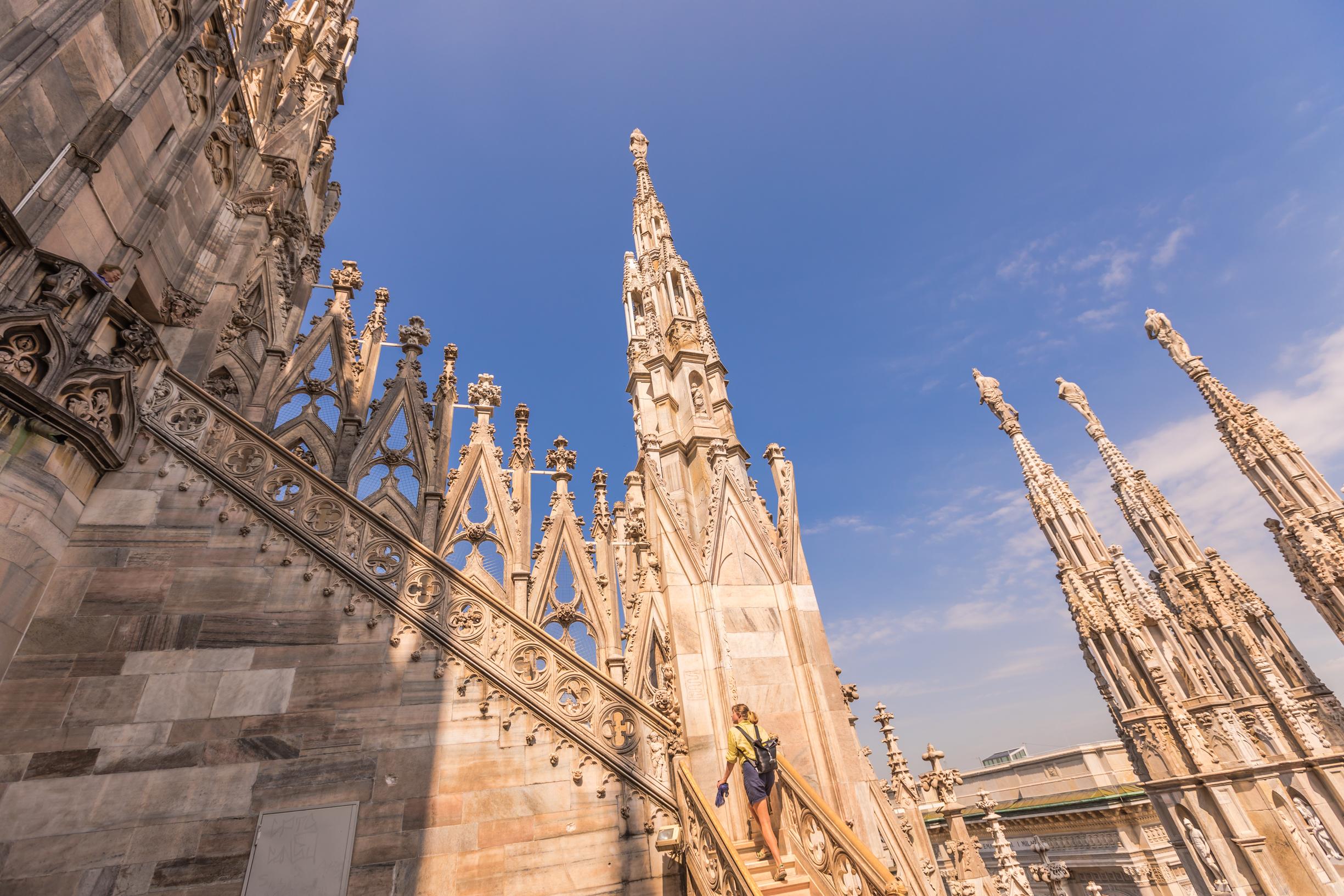
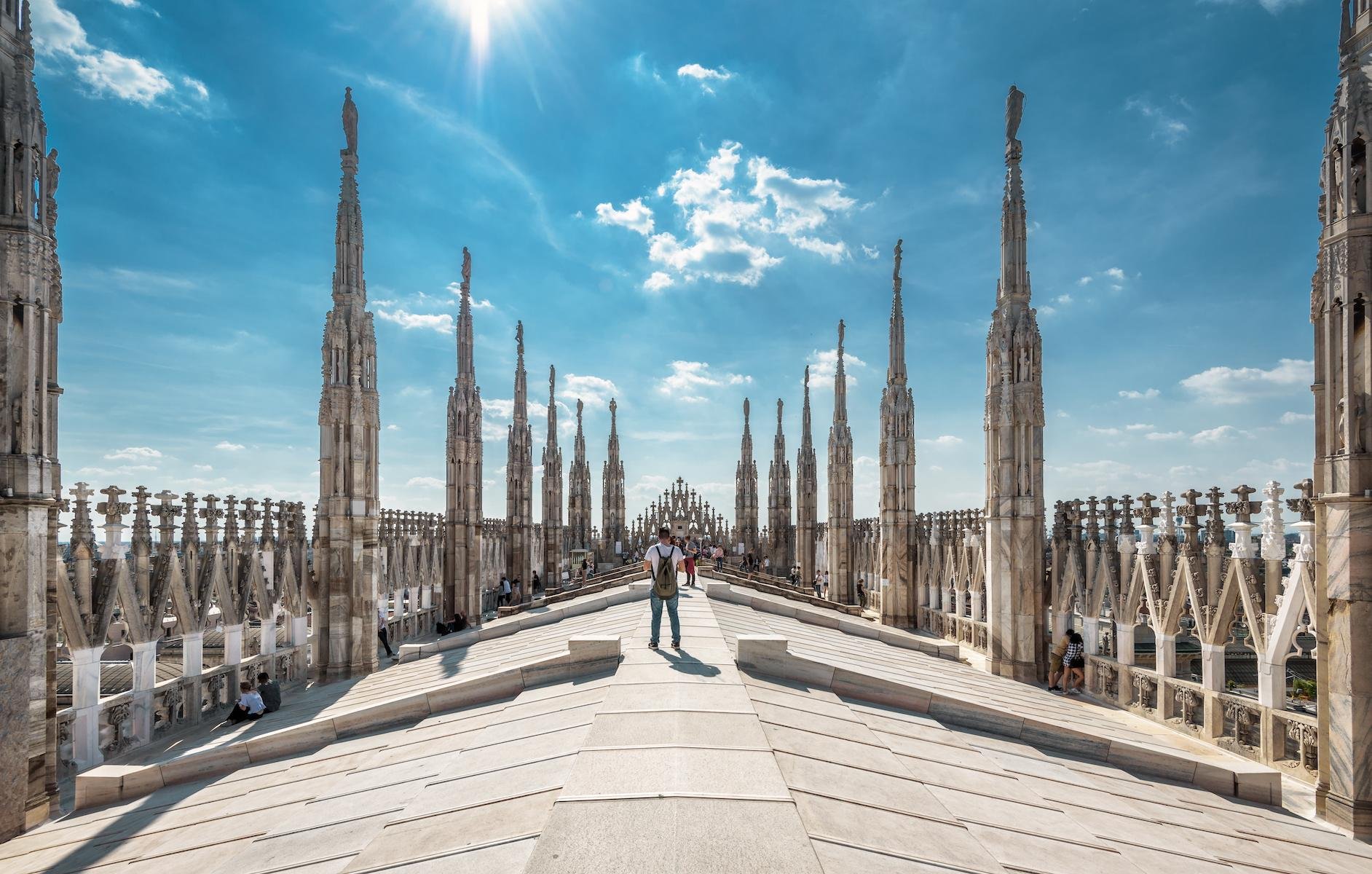
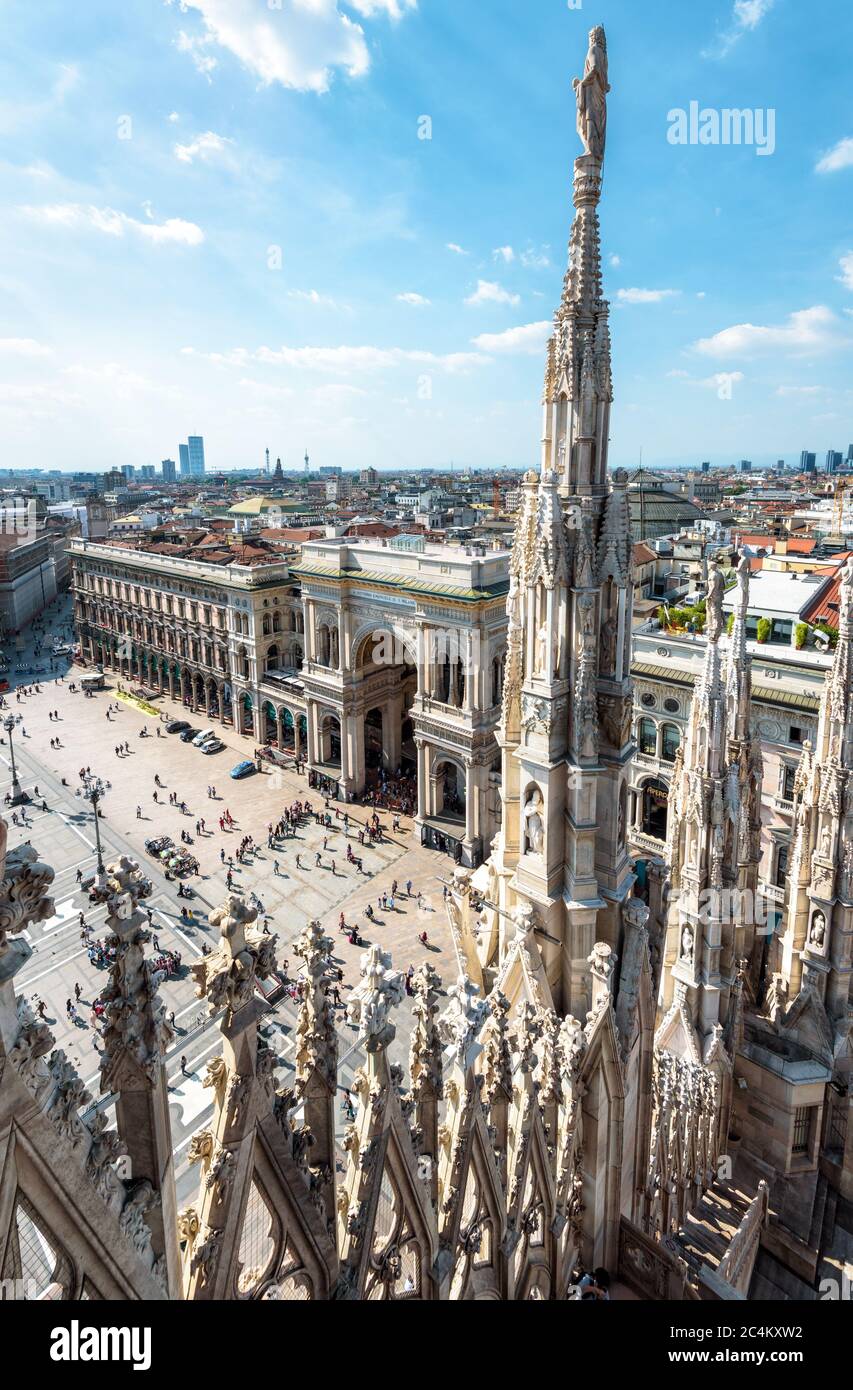
A dense cluster of 135 marble spires erupts from the rooftop, each carved with individual statues and ornamentation. No two spires are alike, ranging from simple pinnacles to elaborately sculpted forms.
Exposed structural buttresses support the cathedral's vast interior while allowing light through the stonework, an engineering solution rare in Italian Gothic design. Visitors can walk directly alongside them on the terrace level.
The oldest spire on the terrace's north slope, named after one of the cathedral's earliest benefactors. It predates many of the surrounding 135 spires by generations of construction.
Clad in pink-gray Candoglia marble, the main terrace spans roughly 1,530 square meters at a height of about 65 meters above the piazza. It offers the widest sightlines over central Milan and, on clear days, the distant Alps.
You reach Piazza del Duomo before the tour groups do and join the queue for the stair access. There is no lift on this route: you climb 251 steps, the spiral tightening as the walls narrow, daylight thinning to a slot until the last turn opens abruptly onto the lower terrace. You pause here to let your eyes adjust. The marble underfoot is uneven, worn smooth in the centre of each slab, and the buttresses you saw only as silhouettes from the square now rise on either side, carved with animals and saints at arm's length. You follow the marked walkway upward across the sloping roof toward the central spire. The higher terrace delivers the payoff. You stand almost level with the Madonnina, turn a slow circle, and pick out the glass towers of Porta Nuova to the north and, on a clear morning, the Alps beyond them. You run a hand along a pinnacle, cool and slightly gritty, and trace a mason's mark cut centuries ago. A visit to the duomo milan rooftop rewards an early start; the light is soft, the crowd thin, and the descent gives you the whole terrace roof one more time. You take the stairs back down into the square, ears full of pigeons and distant trams.
All the details about your upcoming adventure in one place
The duomo milan rooftop lets you walk among the marble spires, flying buttresses, and thousands of carved statues that crown this Gothic cathedral, with the gilded Madonnina watching over the terraces. Reached by stairs or lift, these duomo milan rooftop tours bring you close to pinnacle carvings and open views across the Milan skyline toward the Alps on clear days. It remains one of the most distinctive Milan landmarks for anyone drawn to sacred architecture and open-air terrace walks.
The Duomo di Milano was under construction for nearly six centuries, from 1386 until the final gate details were completed in 1965. What visitors reach at the summit of the duomo milan rooftop is not a viewing platform grafted onto the building but the roof itself — a working surface of Candoglia marble that the cathedral's builders treated as sculpture from the first course of stone. The terraces sit roughly seventy metres above Piazza del Duomo, threaded between 135 spires and guarded by more than 3,400 statues, the largest such population on any Gothic structure. The marble arrived by barge along a network of canals, the Navigli, that Milan's Renaissance engineers — Leonardo da Vinci among the consultants — helped refine to move stone from the quarries at Lake Maggiore into the heart of the city. Each block still carries a mason's mark, and the AUF exemption stamped on quarry shipments gave Italian its idiom for something obtained free of charge. What makes the Terrazze del Duomo unusual is that architecture becomes landscape. Flying buttresses that would remain invisible from the square rise here at eye level, their crockets and finials close enough to read. At the crossing stands the Guglia Maggiore, the main spire, crowned since 1774 by the gilded Madonnina, long the highest point in the city by municipal custom. Walking the milan cathedral terraces, a visitor moves through a forest of pinnacles that reveals how a Gothic cathedral actually holds itself upright — thrust answered by counter-thrust, weight carried outward and down. The cathedral is the seat of the Archbishop of Milan and the fourth-largest church in Europe by interior volume, and its roof functions as both engineering exhibit and civic vantage. On clear mornings the Alps stand along the northern horizon, with the Lombard plain flattening south toward the Apennines. The pink-white stone shifts colour through the day, from cool grey at opening to warm amber before closing. Few European monuments let visitors stand inside their own structural logic the way this one does, and a duomo milan rooftop tour trades the crowded nave below for open sky and the intricate upper order of the building. The stone is porous and continuously restored; conservators replace weathered statues and re-carve details in the same Candoglia marble, so the surface a modern visitor touches is at once medieval in design and perpetually renewed in fact — one of the reasons duomo milan rooftop tours remain among Milan's defining experiences.
Here architecture becomes landscape, and a visitor walks through the forest of pinnacles that reveals how a Gothic cathedral holds itself upright.
Shoulders and knees must be covered to access the Duomo Milan rooftop, since the same modesty rules that apply inside the cathedral extend to the terraces. Sleeveless tops, short shorts, miniskirts and hats are not permitted, and closed-toe, non-slip shoes are strongly advised for the 251-step marble staircase.
All visitors pass through airport-style security screening before reaching the terrace staircase, and photo ID may be requested to validate rooftop tickets. Large backpacks, suitcases and bulky luggage are not allowed on the climb and must be left at accommodation or a nearby luggage service beforehand.
Handheld photography and phone cameras are permitted throughout the rooftop terraces. Tripods, monopods, selfie sticks and flash photography are restricted, particularly in narrow passageways between the spires.
Children of any age can climb the 251 steps to the Duomo Milan rooftop with an accompanying adult, though the narrow marble stairs are not stroller-friendly. Kids are expected to follow the same modest dress code as adults, covering shoulders and knees.
Wheelchair and limited-mobility access to the rooftop terraces is only possible via the paid lift, which reaches the first terrace level; the 251-step stone staircase has no ramp alternative. Some upper walkways among the spires remain stair-only regardless of lift use, so full terrace access is not guaranteed for all mobility needs.
Eating and drinking are not permitted on the rooftop terraces or during the stair climb. Water bottles are generally tolerated for hydration in hot weather but food, snacks and alcoholic drinks must be finished before entering the monumental complex.
Slightly busier with weekend visitors
Mass hours may briefly affect nearby cathedral access
Rooftop hours
Daily 09:00–19:00, last ascent around 18:10
Address
Piazza del Duomo, 20122 Milano MI, Italy
Rooftop access
251 steps via stairs; lift available at extra cost for limited-mobility visitors
Best light
Early morning (09:00–11:00) or late afternoon for softer light on the marble spires
Bag policy
Large bags, backpacks and suitcases must be checked or left behind before ascent
Nearest transit
Duomo metro station (M1/M3), one minute's walk from the piazza
Public transport · 1-5 min from station · Standard ATM metro fare, around €2.20
Take metro line M1 or M3 to Duomo station, which exits directly into Piazza del Duomo just steps from the entrance.
Walk · 5-10 min · Free
From Galleria Vittorio Emanuele II or the historic center, the piazza is reachable on foot within a few minutes.
Taxi · 10-15 min from Centrale station · Approx €10-15
Taxis and ride-hailing apps drop passengers at the edge of the pedestrianized piazza, since vehicles cannot enter the square itself.
Tram · 5-10 min walk from stop · Standard ATM tram fare, around €2.20
Tram lines 2, 3, 12, 14, 16 and 27 stop within a few minutes' walk of the piazza.
Rooftop tickets can typically be cancelled up to 24 hours before the scheduled entry time for a full refund. The 16 EUR entrance fee for stairs-only rooftop access is non-refundable if cancellation falls inside the 24-hour window.
Weather · crowds · average price — dots go green to amber to red as each metric rises.
Mild temperatures around 15-20°C make the stair climb comfortable, with moderate crowds before the summer peak season begins.
Temperatures often exceed 30°C on the exposed marble terraces, so early mornings avoid both heat and the heaviest tour-group traffic.
Cooler air and clearer skies improve the odds of spotting the Alps from the upper terrace, with crowds thinning after September.
Cold winds can make the exposed rooftop feel harsh, but light crowds and crisp visibility often reward visitors who bundle up.
The best arrival window is 09:00-11:00, since terraces are least crowded right after opening before tour groups arrive.
The exposed rooftop terraces can close temporarily during storms or strong winds, so check forecasts before booking a time slot.
A light scarf or shawl lets visitors cover shoulders quickly if their outfit doesn't meet the dress code at the entrance.
The 251-step spiral staircase is narrow and made of worn marble, so non-slip closed-toe shoes make the climb safer.
Choosing the stairs instead of the lift usually means a shorter wait, especially in the 09:00-11:00 arrival window.
Clear autumn and winter days offer the best odds of seeing the Alps from the upper terrace, more so than hazy summer afternoons.
The Galleria Vittorio Emanuele II sits two minutes from the exit, making it an easy add-on after the rooftop visit.
Piazza del Duomo, 20122 Milano MI, Italy
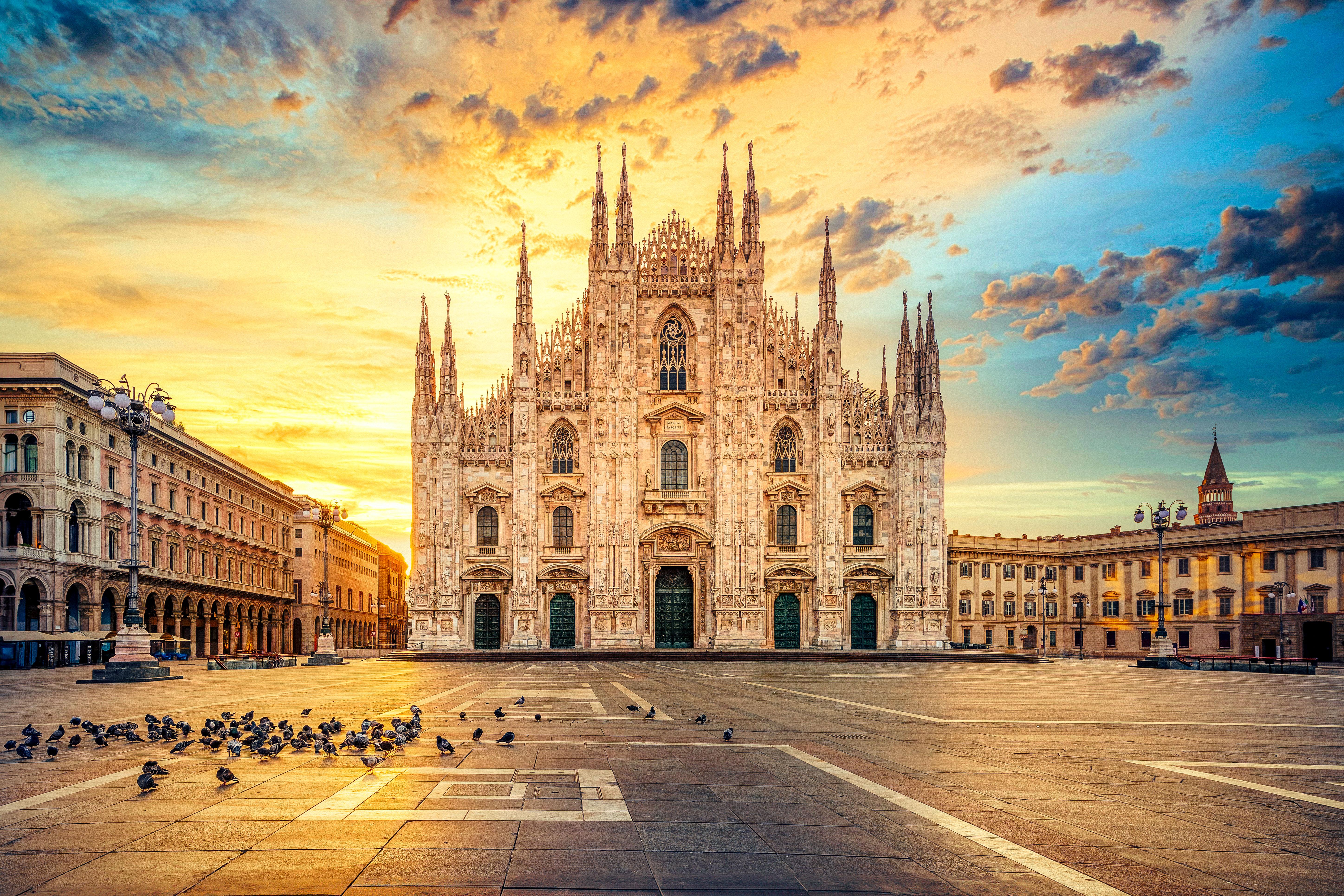
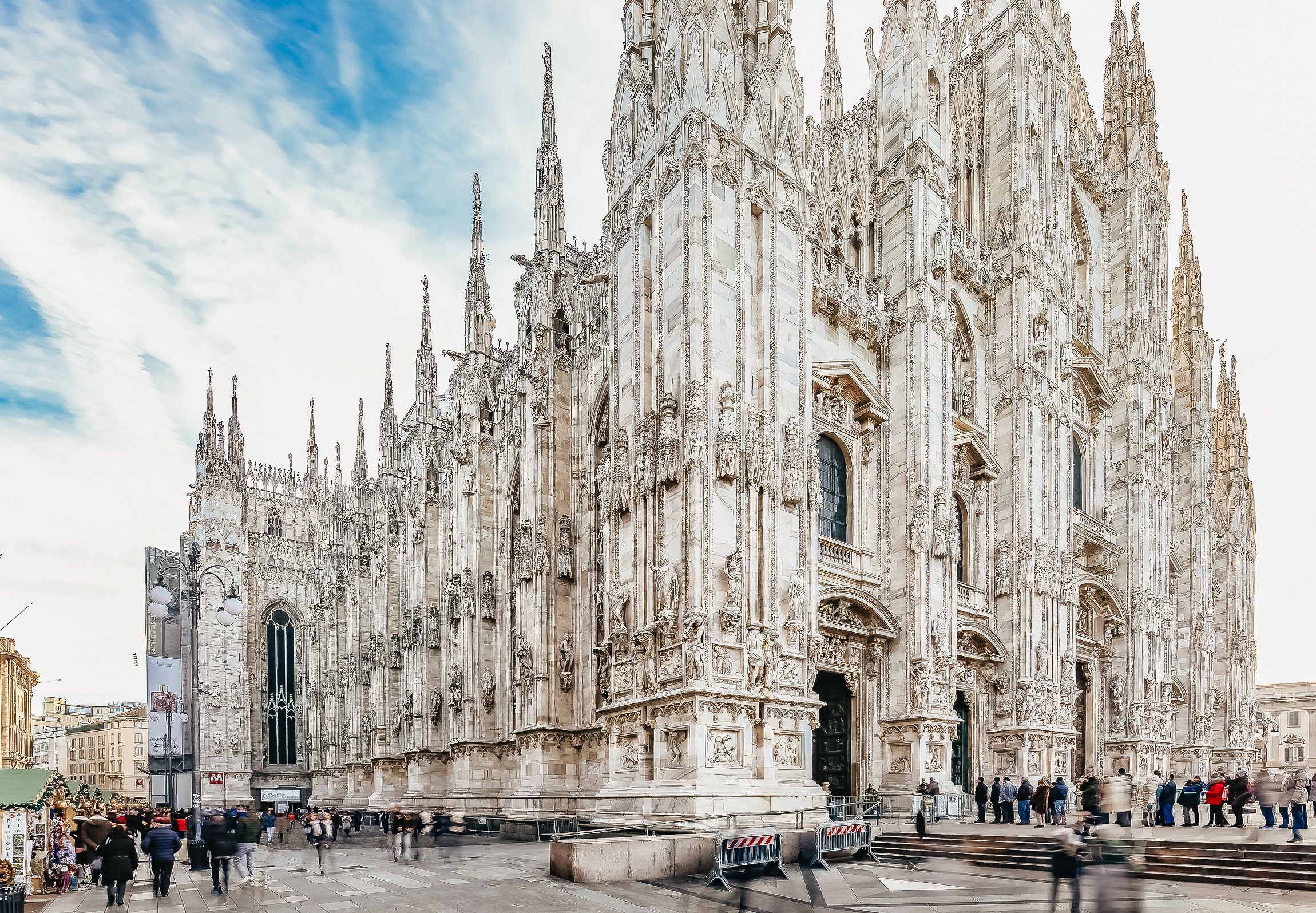
Ticket holders queue near the cathedral's main facade before proceeding to the rooftop stair entrance
Get directionsDuomo Station, Piazza del Duomo
Metro exit opens directly onto the piazza, roughly one minute's walk to the entrance
Get directionsThe story begins in 1386. Archbishop Antonio da Saluzzo ordered a new cathedral on the ruins of Santa Maria Maggiore. Duke Gian Galeazzo Visconti backed the project and granted access to the Candoglia marble quarries. That pink-white stone would define the building. Work advanced under the Fabbrica del Duomo, the workshop still charged with maintenance today. Progress was slow across the fifteenth century. Architects arrived from France and Germany, clashing over Gothic proportion. In 1418 Pope Martin V consecrated the high altar, though the structure remained far from finished. The dome and the octagonal tiburio came later; Giovanni Antonio Amadeo shaped much of that upper work around 1490. The spires rose gradually, and the terraces became a walkable surface of marble ridges and flying buttresses — the ancestor of the modern duomo milan rooftop. The crowning moment came in 1774, when the gilded Madonnina statue was placed atop the main spire. The facade, however, still lagged. Napoleon Bonaparte, crowned King of Italy inside the cathedral in 1805, ordered its completion and funded the effort. The main facade was finished around 1813. Later restorations refined the Gothic detail, and the final spire gates opened in 1965, completing a build lasting nearly six centuries. Visitors climbing the 251 stairs today walk among those spires — a defining draw of Milano landmarks and the reason duomo milan rooftop tours remain popular. The cathedral has never truly been finished. Milan's polluted air erodes the soft Candoglia marble, so quarries still supply replacement blocks. Stonemasons work continuously, and scaffolding is a permanent fixture. A duomo milan rooftop tour therefore crosses an active worksite, where medieval statuary sits beside freshly cut stone. War brought its own scars: Allied bombing in August 1943 damaged sections, though the structure survived. The forest of 135 spires and roughly 3,400 statues endures. Those buying duomo milan rooftop tickets ascend a monument whose Fabbrica keeps carving, six hundred years on, ensuring the Milan cathedral rooftop remains both relic and living workshop.
Archbishop Antonio da Saluzzo begins the cathedral, backed by Gian Galeazzo Visconti and Candoglia marble.
Pope Martin V consecrates the high altar within the still-unfinished structure.
Giovanni Antonio Amadeo shapes much of the octagonal tiburio and upper works.
The gilded Madonnina statue is raised atop the main spire.
Napoleon, crowned King of Italy here, orders and funds the facade's completion.
The main facade is finished after Napoleonic-era funding.
Allied bombing in August damages sections, though the cathedral survives.
The final spire gates open, closing a build lasting nearly six centuries.
The central walkway on the Main Terrace faces the gilded Madonnina directly, offering the closest publicly accessible angle on the statue atop the tallest spire. Stand near the rampart facing south toward the spire to frame her against the sky, and this exact vantage point is what most guides mean by duomo milan rooftop photography.
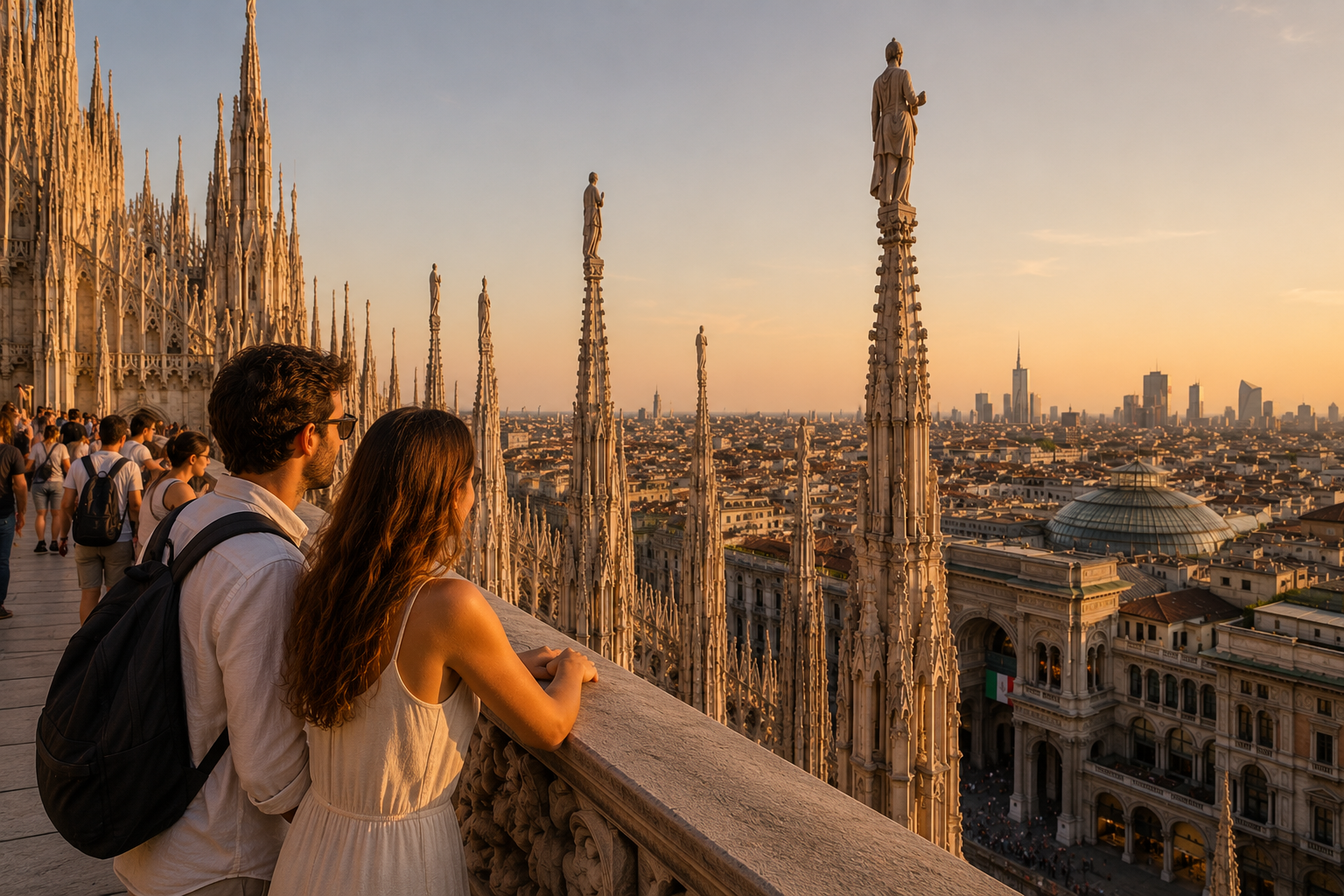
A raised belvedere point between the cluster of marble spires puts dozens of pinnacles and statues at eye level in a single frame, with the forest of tracery receding on either side. This spot works best for wide-angle shots looking straight down the row of spires rather than out toward the skyline.
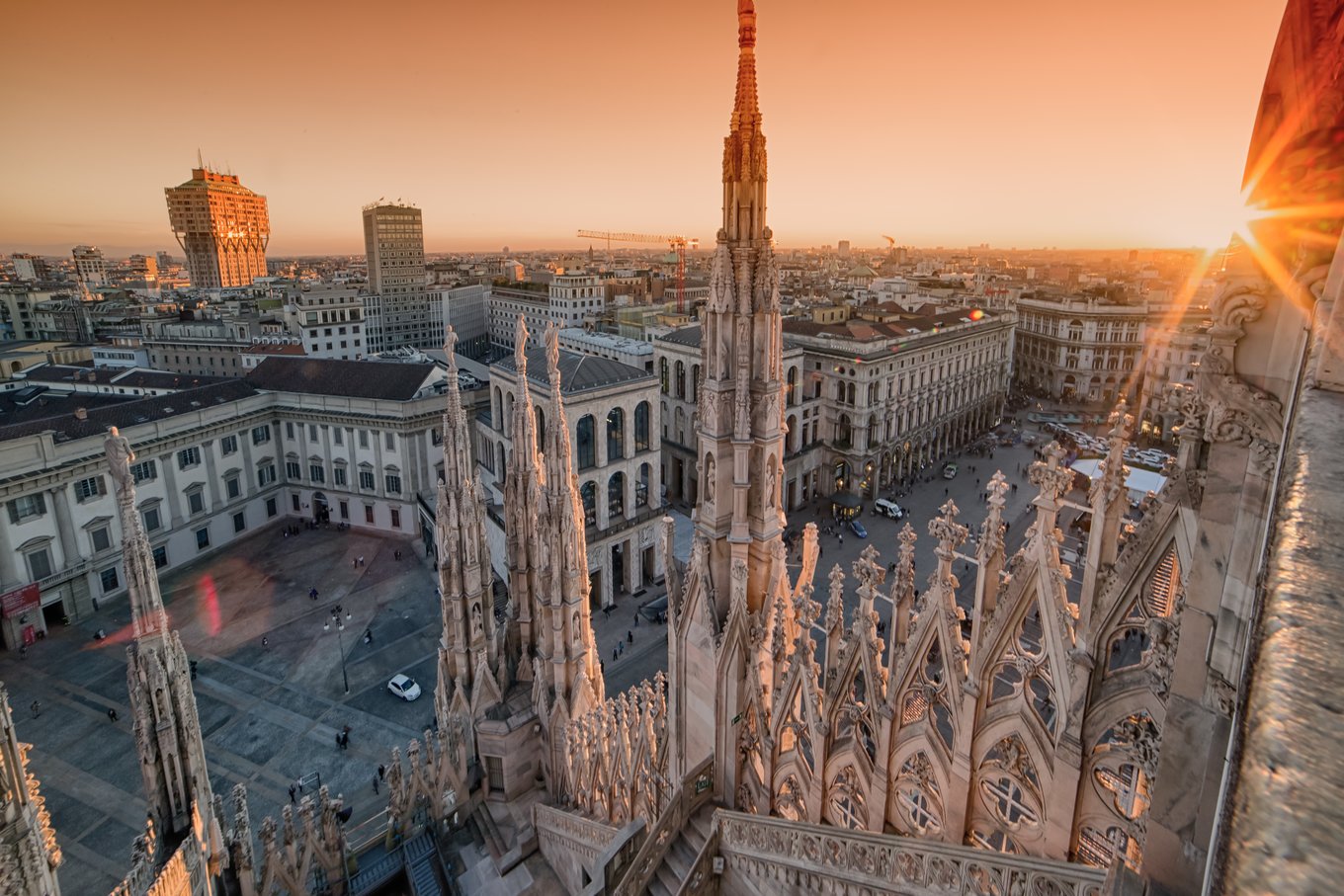
From the north side of the terraces, the outlook opens toward Sforza Castle and, on clear days, the Alpine arc on the horizon beyond Milan's rooftops. This angle suits a telephoto compression shot layering castle, city, and mountains behind the marble foreground.
The highest longitudinal walkway running the full length of the cathedral roof gives an elongated view with spires receding in both directions and the Madonnina visible at the far end. It is the classic corridor shot for capturing scale and symmetry across the terraces.
Near the Carelli Spire on the north slope, the oldest spire on the rooftop offers a quieter corner away from the main crowds with a tighter composition of statues and finials. It is a good secondary stop after the main Madonnina viewpoint.
Climbing to the duomo milan rooftop with children is manageable but requires planning around narrow stairwells and no downward lift option. Families doing the skip-the-line duomo milan rooftop tour should decide in advance whether little legs will manage the 251 steps or whether a carrier and elevator ticket make more sense.
Break the climb into two stops: the stairs land on the lower terrace first, then a steeper flight leads to the belvedere. Let kids pause at each landing rather than pushing straight through, since the stairwell itself has no windows or views to distract tired legs.
A soft carrier works far better than trying to hold a child's hand on the narrow, spiraling steps. Reserve carrying for children too small to manage stairs alone, since the steps are steep and single-file with tourists moving both directions.
Choosing the elevator ticket is the practical option for very young children, tired toddlers, or anyone unsure they can finish the ascent. Note the lift only goes up: everyone, regardless of ticket type, descends via stairs, so budget energy accordingly.
Children around 7 and up who can climb independently tend to manage best; younger kids do fine if carried rather than asked to walk the full 251 steps themselves.
There's no food service on the terraces themselves, but visitors doing a duomo milan rooftop tour are steps from some of Milan's best Duomo-facing dining, mostly clustered on Piazza del Duomo and inside nearby department stores.
Multiple counters (mozzarella, sushi, lobster, steak) share a glass terrace looking straight at the spires; go right after your rooftop tour before the lunch rush fills the shared tables.
Part of the Rinascente food hall; order the burrata or a mozzarella tasting board, a good pick for a quick plate rather than a full sit-down meal.
On the top floor of Il Mercato del Duomo facing the cathedral, run by students of the three-Michelin-star chef; best for an unhurried lunch or dinner, book ahead as tables with a view fill fast.
Also in the Rinascente food hall, with a panoramic lounge over the Duomo's spires; suits a coffee, light breakfast, or aperitivo rather than a full meal.
Real experiences from real travelers
Climbing onto the duomo milan rooftop late in the afternoon was the highlight of our trip, with the sun turning all that Candoglia marble a warm honey color. You end up walking among the spires and saint statues rather than just looking at them from below. Bring water because there is little shade up on the terraces.
The duomo milan rooftop tours we joined moved at a good pace and the guide pointed out the Madonnina and the details in the flying buttresses we would have missed. Standing level with the pinnacles gives you a real sense of the cathedral's scale. Views stretch clear across the city to the Alps on a clear day.
We timed our visit for early evening and the light on the Gothic tracery was soft and warm. From the terrace you look straight down onto Piazza del Duomo and across to the Galleria's glass dome. The marble underfoot was still warm from the summer sun.
The rooftop itself is remarkable, walking among centuries-old spires with the Madonnina glinting above you. It does get crowded on the narrower walkways so patience helps. Our milan cathedral rooftop tour guide kept us together and shared good background on the stonework.
What surprised me was how much carving covers every pinnacle once you are up among them on the rooftop. Each spire holds a statue and the lacework in the marble is astonishing at close range. We bought our duomo milan rooftop tickets in advance which saved a long wait at the entrance.
Being on the duomo milan rooftop at sunset, with the whole square laid out below and pigeons wheeling around the spires, felt like stepping into another century. The stairs are manageable if you take your time, and there is a lift option too. Cool breeze up top made the summer heat bearable.
Even under grey November skies the milan landmarks spread out below were a treat, and the marble looked ghostly and pale. You walk right past the buttresses and can see how the whole structure holds together. Fewer crowds off-season made photographing the pinnacles much easier.
Salire sul tetto del Duomo resta una delle migliori cose da fare a Milano, tra guglie e statue a portata di mano. The terrazze del Duomo give a perspective on the city you cannot get anywhere else. Consiglio di prenotare per evitare code lunghe in estate.
We joined a duomo milan rooftop tour on a hot July morning and started early to beat both the heat and the queues. Walking out onto the open marble terraces among the pinnacles is something photos never quite capture. The Madonnina statue up close is smaller than expected but no less striking.
Late January meant crisp air and long shadows across the rooftop terraces, and the pale marble almost glowed. From up there the skip-the-line access we had booked meant we spent our time among the spires rather than in a queue. Genuinely one of the finest views over the city.
Everything you need to know for your journey
The Duomo Milan rooftop is open daily from 09:00 to 19:00, with last ascent typically around 18:10.
Stairs-only rooftop access for an adult at full price costs 16 EUR.
The stairs-only route to the Duomo Milan rooftop involves 251 steps; a paid lift is also available for those who prefer not to climb.
The best arrival window is 09:00-11:00, since the terraces are least crowded right after opening before tour groups arrive later in the day.
Yes, the same modesty rules as the cathedral interior apply on the rooftop: shoulders and knees must be covered, and hats should be removed.
Prohibited items include large backpacks, suitcases, tripods, selfie sticks, glass bottles, knives, drones, prams and high heels.
No, eating and drinking are not permitted on the rooftop terraces, though a water bottle is generally fine in hot weather.
The Duomo metro station on lines M1 and M3 exits directly into Piazza del Duomo, a one-minute walk from the entrance at 20122 Milano MI.
Yes, children can join a Duomo Milan rooftop tour with an accompanying adult, though strollers cannot be taken up the stair route.
Rooftop tickets can generally be cancelled up to 24 hours before the scheduled entry time for a full refund.
The Galleria Vittorio Emanuele II, Museo del Novecento and Teatro alla Scala all sit within a few minutes' walk of Piazza del Duomo.
Wheelchair access reaches the first terrace level via a paid lift, though the full 251-step stair route has no ramp alternative.
A 19th-century glass-domed shopping arcade linking Piazza del Duomo to La Scala. Its mosaic-floored octagon is a popular photo stop.
A modern and contemporary art museum housed in the Palazzo dell'Arengario, right beside the cathedral square.
One of the world's most famous opera houses, with an on-site museum of costumes and memorabilia.
A quiet medieval square just off Piazza del Duomo, ringed by historic guild buildings.
A Lombard Gothic church with a Baroque bell tower, included on some combined cathedral tickets.
A five-star hotel in a restored 19th-century palazzo directly behind the Galleria.
A design-forward boutique hotel overlooking Piazza del Duomo itself.
A design hotel a short walk from the cathedral, popular for its central location.
The streets immediately around Piazza del Duomo hold a dense cluster of hotels across all price tiers, all within a 10-minute walk of the entrance.
Join thousands of happy travelers who have discovered this incredible experience
Book Your Experience Now